Amir Peters · 16 September 2026
Strategic Approaches to Domain Authority Preservation During Service Provider Transitions
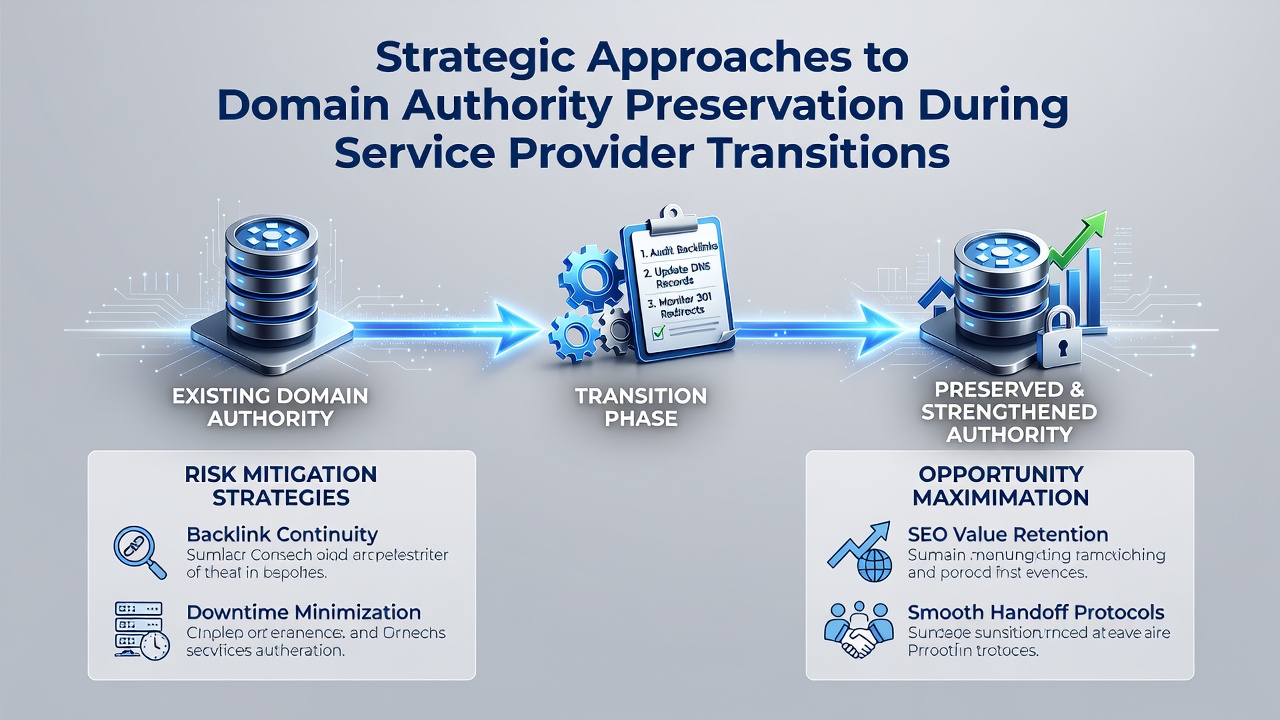
Domain authority functions as a predictive score that search engines assign based on backlink quality, content relevance, and overall site signals, so transitions between service providers create measurable risks when those signals shift without careful coordination. Research from multiple industry analyses indicates that abrupt changes in hosting, SEO management, or registrar services can trigger temporary drops in visibility when crawlers detect inconsistencies in redirects or content delivery. Observers note that companies planning provider switches in advance often maintain steadier metrics by conducting full audits of current backlink profiles before any handoff occurs.
Core Risks During Provider Changes
Service provider transitions encompass shifts in hosting environments, domain registrars, or specialized SEO agencies, each carrying distinct technical implications for how search engines evaluate site trust. Data shows that incomplete 301 redirect chains during server migrations lead to lost equity in backlinks when legacy URLs fail to forward properly, while registrar moves can introduce DNS propagation delays that interrupt indexing cycles. Experts have documented cases where third-party providers altered site structures without prior mapping, resulting in duplicate content flags that dilute authority signals across multiple versions of pages.
Those who track metrics through tools like Moz or Ahrefs frequently report that authority scores fluctuate most sharply in the first 30 to 60 days after a transition begins, particularly when new providers lack immediate access to historical crawl data. What's notable is how regional variations appear in recovery timelines, with sites hosted on infrastructure subject to stricter data regulations sometimes experiencing longer stabilization periods due to compliance-related configuration checks.
Pre-Transition Audit Procedures
Comprehensive audits form the foundation of preservation efforts, requiring teams to catalog every indexed URL, backlink source, and internal link structure well before any provider switch. Researchers at academic institutions studying web graph dynamics have found that sites maintaining detailed inventories of referring domains recover faster because they can prioritize outreach to high-value link sources during the move. Analysts recommend exporting full backlink reports and crawl logs from the outgoing provider, then cross-referencing them against live site data to identify gaps that new teams must address immediately upon takeover.
Monitoring systems should remain active throughout the process, with alerts configured for changes in crawl frequency or indexing status that might signal emerging issues. One documented example involved a mid-sized e-commerce platform that preserved over 95 percent of its referring domains by running parallel audits with both outgoing and incoming providers, allowing real-time verification of redirect functionality before full cutover.
Implementation of Technical Safeguards
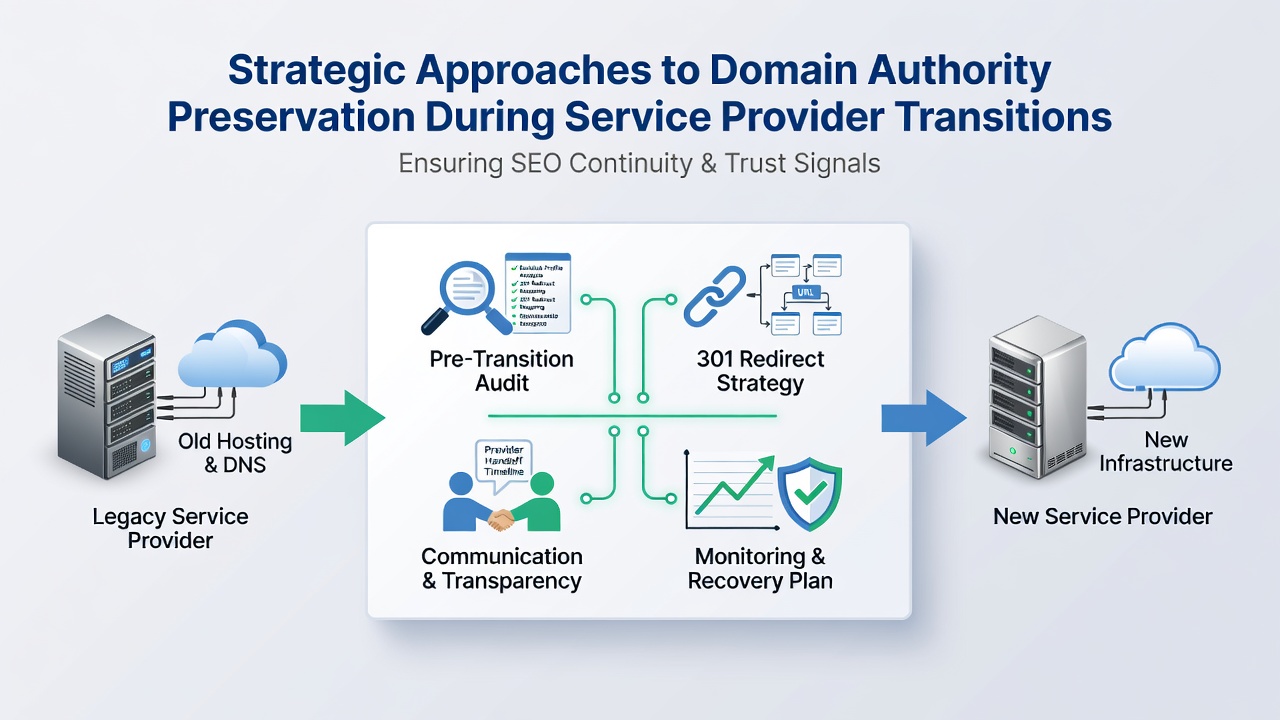
Redirect mapping requires precise one-to-one correspondence between old and new URLs, supported by server-level configurations that search engine guidelines endorse for preserving link equity. According to resources available through Google's documentation on site moves, proper implementation involves testing redirects at scale to confirm they return 301 status codes rather than temporary alternatives that could fragment authority. New providers must replicate existing canonical tags and hreflang attributes exactly to avoid splitting signals across language or regional versions during the handover.
Content parity checks become essential when providers change, because even minor alterations to page templates or metadata can affect how algorithms interpret topical relevance. Studies from European research consortia on web preservation show that maintaining identical content delivery timelines across transitions reduces the likelihood of re-crawling delays, especially for sites with large inventories of dynamic pages. Teams often deploy staging environments to validate all technical elements before DNS propagation begins, ensuring that metrics tracked through third-party platforms reflect continuity rather than disruption.
Post-Transition Monitoring and Adjustment
Once the new provider assumes control, ongoing surveillance of domain authority indicators helps detect deviations early enough for corrective action. Figures from industry reports released around September 2026 highlighted that organizations using automated backlink monitoring saw quicker identification of lost links stemming from registrar synchronization errors. Adjustments may include targeted disavow file updates or renewed outreach campaigns when certain referring domains drop out during the stabilization window.
Collaboration protocols between outgoing and incoming teams reduce friction, with shared access to analytics dashboards allowing continuous comparison of pre- and post-transition performance. Data from North American digital marketing associations reveals that structured knowledge transfer sessions covering historical optimization tactics contribute to smoother metric recovery across multiple measured domains.
Conclusion
Strategic preservation of domain authority during service provider transitions relies on methodical audits, precise technical execution, and sustained monitoring that together minimize disruptions to established search signals. Evidence from diverse sources underscores the value of advance planning and cross-provider coordination in maintaining continuity. Organizations that apply these approaches consistently demonstrate steadier performance trajectories when navigating changes in hosting, registrar, or SEO management arrangements.