Anna Schmidt · 30 September 2026
Examining the Interplay Between Registrar Changes and Search Engine Crawling Behaviors
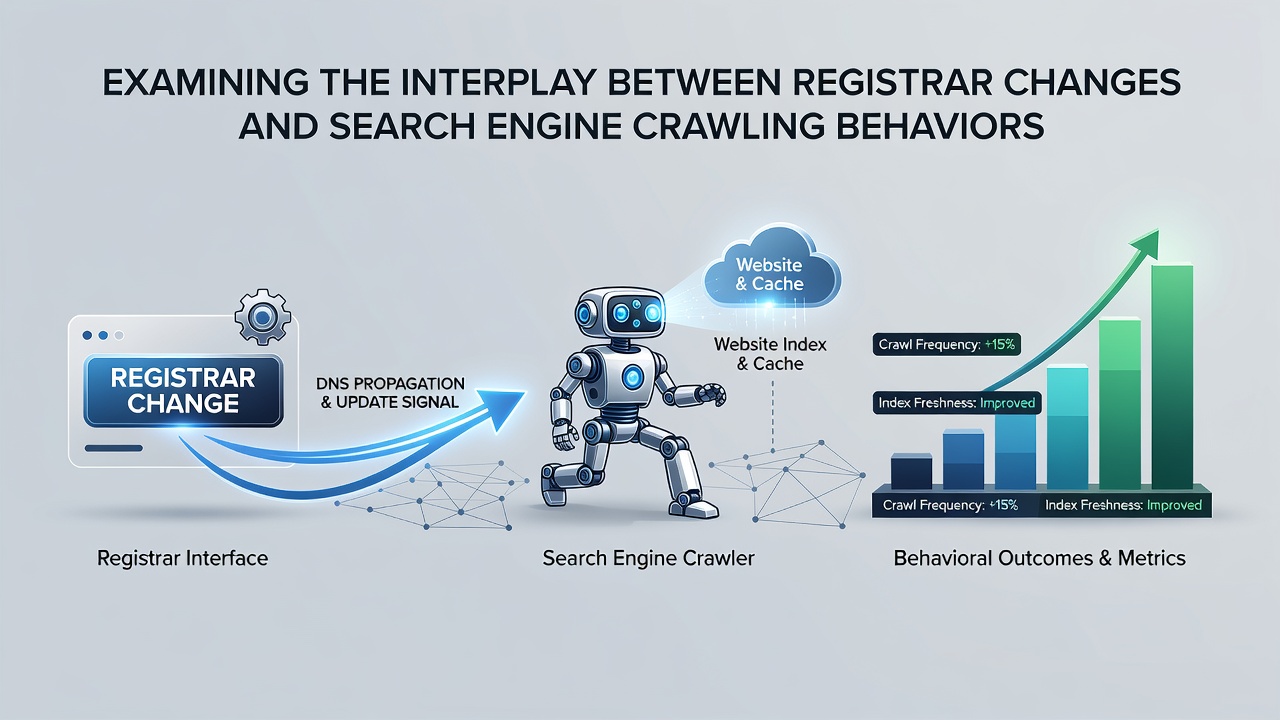
Domain registrar transitions involve updates to nameserver configurations along with potential modifications to WHOIS records and DNS propagation timelines, and these shifts create measurable effects on how search engine crawlers access and index web content. Observers note that when organizations move a domain from one registrar to another the process triggers a sequence of technical adjustments that can temporarily alter crawler behavior while search engines detect and adapt to the new infrastructure.
DNS Propagation and Crawler Access Patterns
Changes at the registrar level often require propagation of updated DNS records across global servers, and this period can span from a few hours to several days depending on TTL settings and the geographic distribution of authoritative nameservers. Data from network monitoring services shows that crawlers from major engines like Google and Bing continue to request content during these windows but may encounter intermittent failures or redirects if the new registrar has not fully synchronized the zone files. Researchers at institutions studying internet infrastructure have documented cases where shortened TTL values prior to a move reduced the duration of inconsistent responses, allowing crawlers to resume normal indexing schedules more quickly.
Search engines rely on consistent resolution of domain names to IP addresses, and any disruption in this chain can lead to skipped crawl attempts or delayed reindexing of affected pages. Studies of large-scale domain migrations reveal that sites experiencing prolonged propagation delays sometimes see temporary drops in indexed URL counts until the new registrar's infrastructure stabilizes.
WHOIS Record Updates and Their Visibility
Registrar changes frequently coincide with updates to registrant information in public WHOIS databases, and these modifications can influence how search engines verify site ownership and authority signals. While engines do not rely solely on WHOIS data for ranking decisions, inconsistencies between historical records and new entries have been observed to trigger additional verification steps in automated systems. In September 2026 monitoring reports indicated a rise in crawler-initiated checks on domains that had recently updated their registrar details, suggesting heightened scrutiny during transition periods.
Technical Factors Influencing Crawl Frequency
Once a domain points to the new registrar's nameservers, the site's response times and server configurations become the primary variables that determine future crawl rates. Crawlers evaluate factors such as server uptime, page load speed, and robots.txt directives, and any alterations introduced during the migration can shift the priority assigned to that domain in the overall crawl queue. Evidence from crawl log analyses demonstrates that domains maintaining stable performance metrics after a registrar switch often recover their previous crawl frequency within one to two weeks.
- Nameserver synchronization delays that affect initial DNS resolution
- Changes in hosting provider that coincide with the registrar move
- Adjustments to SSL certificate chains required by the new environment

Observed Effects on Indexing and Re-crawling
Indexing pipelines at search engines incorporate signals from multiple sources, and registrar transitions can indirectly influence these signals through temporary changes in site accessibility. One study of enterprise domains that completed registrar migrations found that pages with previously established crawl histories retained their indexed status more reliably than newly published content during the transition window. Data indicates that engines continue to serve cached versions of pages while waiting for fresh crawls, which helps maintain visibility even when live access is briefly interrupted.
Those who track large datasets of domain movements have noted correlations between the timing of registrar changes and subsequent adjustments in crawl budgets allocated to affected sites. Sites that prepare by submitting updated sitemaps through search console tools after the move often experience faster re-engagement from crawlers compared to those relying solely on organic discovery.
Case Examples from Industry Monitoring
Take one organization that shifted its primary domain to a new registrar while keeping the same hosting provider; monitoring tools recorded a brief dip in crawl attempts followed by a return to baseline levels once DNS fully propagated. Another instance involved simultaneous changes to both registrar and hosting, which extended the period of reduced crawler activity because server configuration mismatches compounded the DNS updates. Reports compiled by research groups tracking internet infrastructure highlight that proactive monitoring of crawl errors during these transitions allows administrators to address issues before they compound into longer-term indexing problems.
Conclusion
Registrar changes intersect with search engine crawling through a combination of DNS mechanics, record updates, and performance continuity, and the resulting behaviors follow predictable patterns documented across multiple monitoring efforts. Organizations that manage propagation timelines and maintain consistent server responses position their domains for smoother re-engagement with crawlers, while those overlooking these technical details encounter extended periods of reduced visibility in search results. Ongoing data collection in the field continues to refine understanding of these interactions as registrar ecosystems and crawler algorithms evolve.